The Operating Language of a Brand: Why Verbal Identity Belongs Between Strategy and Design
By Zane Cassidy, Creative Director of Dean&Co.
The Step Most Brand Processes Skip
A real estate project gets described in a pitch deck one way, on the website another way, and in a leasing meeting a third way. Each version is technically about the same building, but no two sound like they belong to the same brand. This happens constantly. It happens because most branding processes move directly from strategy to visual identity and skip the step in between.
The step they skip is the one that holds everything together.
That middle step is verbal identity. It is how a brand sounds, how it names things, and its unique point of view. It takes the strategic foundation and turns it into something customer-facing, which is what strategy is ultimately for.
More Than Messaging
Verbal identity is sometimes treated as a synonym for messaging or copywriting. It includes those, but the scope is much wider. A complete verbal identity defines the naming system for the project (buildings, districts, amenities, signature elements), the voice and tone the brand uses across every channel, the narrative architecture behind the place, and a tagline (which is also your main marketing concept) that the brand can return to. It even covers the internal vocabulary that team members and partners reach for when they describe the project.
These are the building blocks of how a brand is experienced through language. They are also the parts of branding that get used the most often, by the most people, every day.
Verbal Identity Extends the Return on Clarity
In an earlier piece, we wrote about the return on clarity that comes from a strong brand strategy. Verbal identity is how that clarity reaches everyone outside the strategy session.
A developer's project does not get described only by the developer. It gets described by leasing teams, brokers, capital partners, architects, marketers, contractors, and city officials. Each one is telling some version of the story.
Without a verbal identity, every one of those groups makes language up. They reach for adjectives that feel right. They borrow phrasing from comparable projects. The result is a brand that says one thing in a pitch deck, something else on a website, and something different again in a leasing meeting.
With a verbal identity in place, the story stays consistent. Everyone gets the same playbook, in the same words, with the same structure. The brand sounds like one brand.
Why Consistency Pays
That consistency has real financial implications across the development pipeline.
It helps with investment. When a capital partner hears the same story from the developer, the broker, and the marketing materials, the consistency itself becomes a signal. The team knows what they are building, which means the team is more likely to build it.
It helps with lease-up. A leasing agent who can describe the project in three sentences, the same three sentences every other agent uses, qualifies tenants faster and closes them with less back-and-forth. The first conversation does more work.
It helps with stabilization. Once the project is open, the verbal identity guides programming decisions, partnerships, and ongoing content for years. New vendors and new team members come into the orbit of the asset and find the language already waiting for them. The brand does not drift.
A consistent voice creates familiarity. Familiarity creates trust. Trust shortens decisions at every stage of the deal.
Case in Point: The Berg and The Stevedore
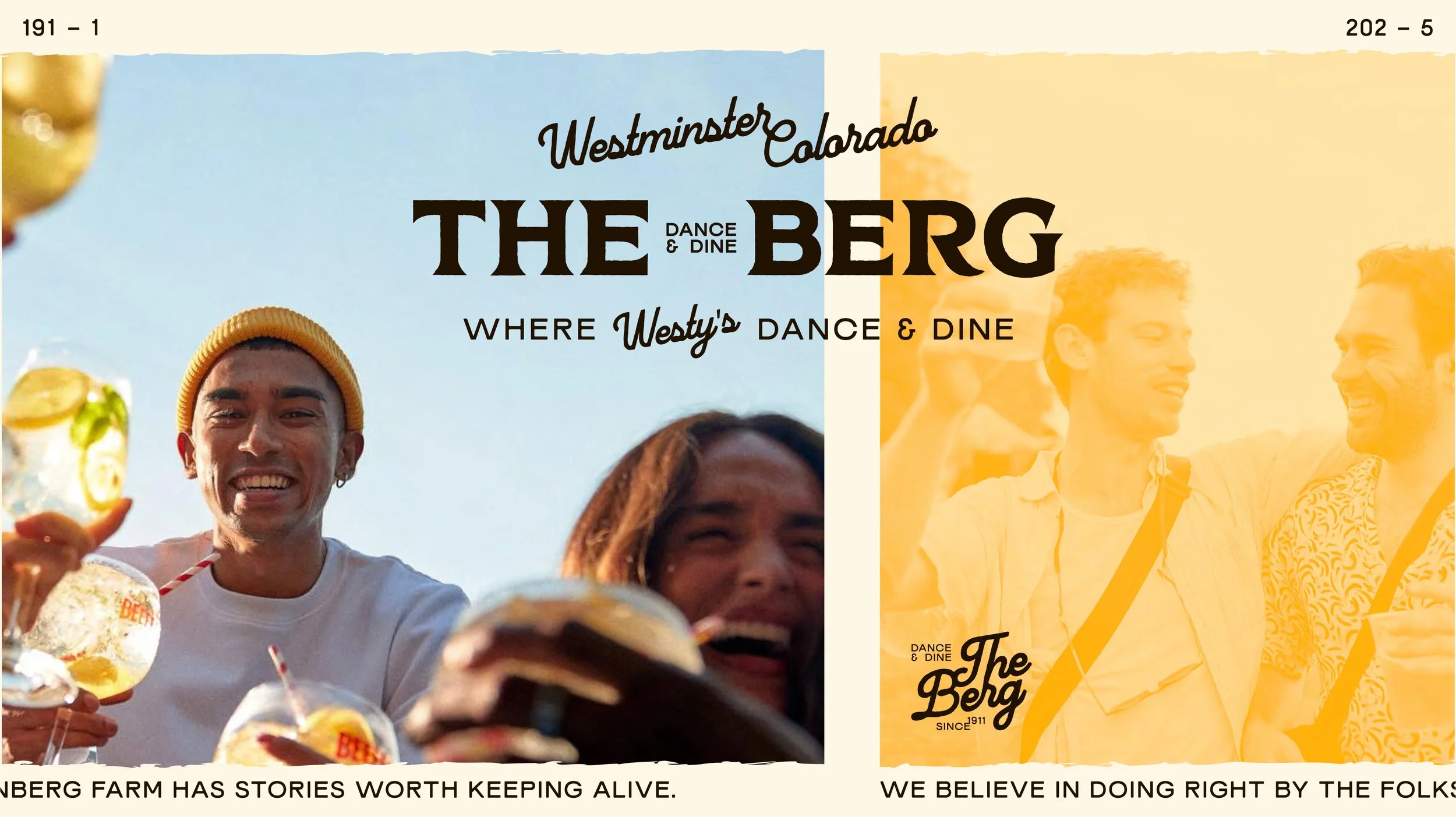
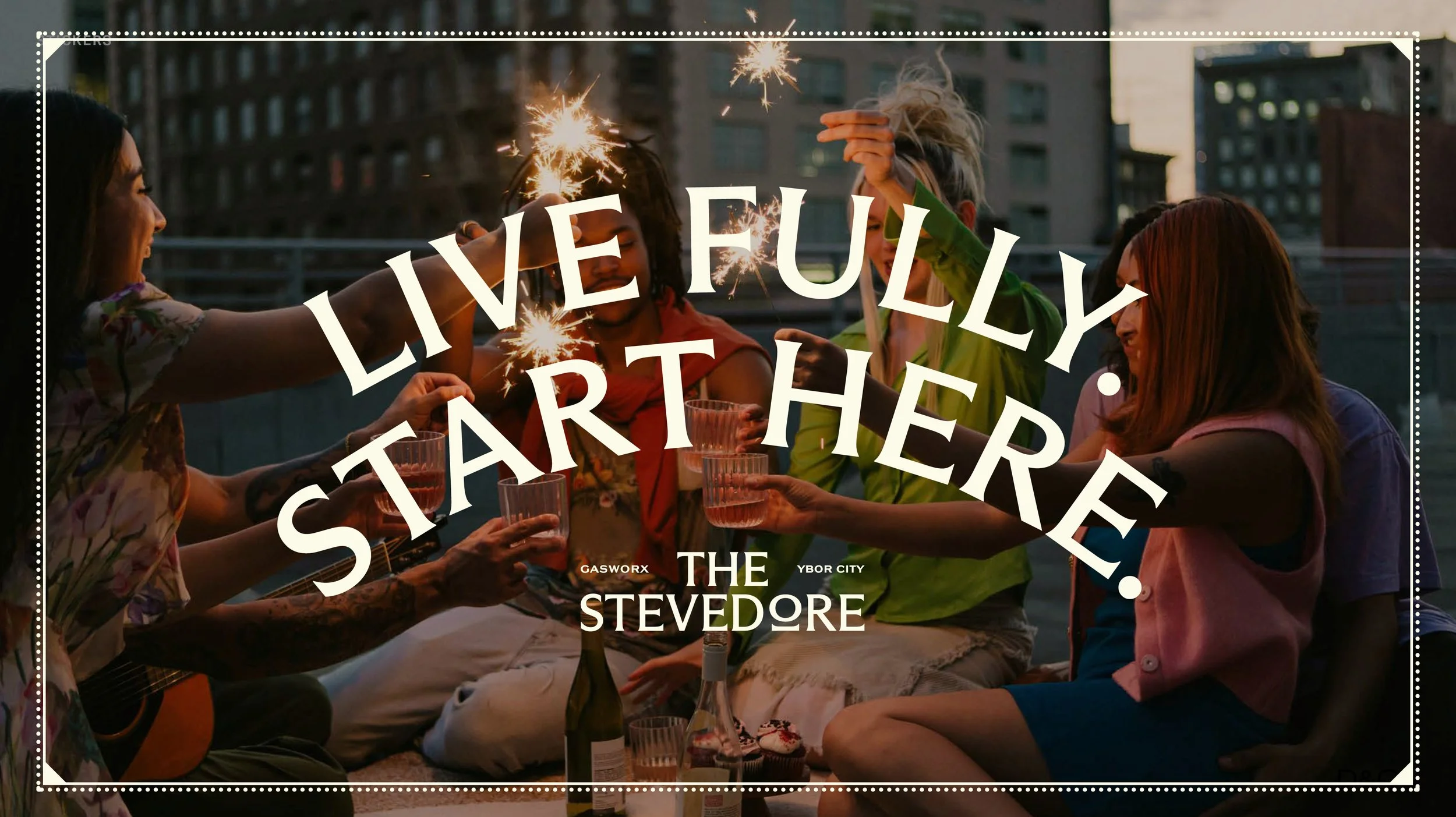
The Berg is a food hall in Westminster, Colorado, rising on the grounds of the historic Shoenberg Farms. The Stevedore is a residential development in Tampa's Ybor district, named for the longshoremen who lived on that specific parcel and built the city's port economy starting in the 1880s. Two different projects, two different cities, two different programs. Both arrived at verbal identity with their names already in place.
What verbal identity contributed in each case was the work behind those names. For The Berg, that meant researching a century-old dairy and poultry operation, the largest of its kind west of the Mississippi at its height, and developing a folksy, optimistic voice that could honor that history while sounding like the Westminster of today. For The Stevedore, it meant historical research into the men who lived and worked on that specific parcel, primarily members of the Black community, and building a voice that spoke about their legacy with accuracy, depth, and respect.
In both cases, the verbal identity is what gave the name meaning that the rest of the brand could be built on.
Not every project draws on history this way. Some are about fitting into a community that already exists, where the work is making sure the language used will be accepted, repeated, and still feel right ten years from now. Verbal identity protects against trend-chasing in those cases. It anchors the brand to something more durable than the marketing language of any given moment.
Either way, the verbal identity work happens before a single visual is designed.
It Sets Up the Visual
Verbal identity also does something for design that often goes uncredited. It sets up the brief.
Designers need a strong brief, and verbal identity is a big part of that brief. When the words are agreed on, the visual has a clear territory to occupy. Structure frees creativity. With a defined narrative, voice, and naming system already approved, the design team solves the right problem from the first round.
It also derisks the design phase. Reviews go better. Fewer surprises, fewer reopened debates about what the project is supposed to feel like, fewer unproductive rounds. Clients spend less time and budget recovering from foundation issues that should have been resolved before design began.
Strategy gives the brand its purpose. Verbal identity gives it shape. Visual identity then dresses it. When those steps run in that order, the work moves faster and lands stronger.

What a Branding Veteran Saw
In a recent verbal identity session, one of our clients said he had not come across verbal identity treated so uniquely as its own discipline within the branding process, and that getting it right was clearly important and worthy of its own step.
That reaction is a common one in our work. Once teams see verbal identity done well, they recognize it as a missing step they had been working around for years.
It is the difference between a brand that has been described and a brand that has been built to speak for itself.

The Operating Language of a Brand
Strategy answers what a brand stands for and creates your plan. Verbal identity is how that answer and plan reaches everyone else.
It is the operating language of the brand, used by every team, in every conversation, across the entire life of the asset. It extends return on clarity into every phase of development. It gives stakeholders a shared vocabulary. It gives designers a clearer brief. It gives consumers a brand that sounds like it knows itself.
Words come before visuals, because the words are what the visuals are built to express. That is the most valuable step most brand processes skip.